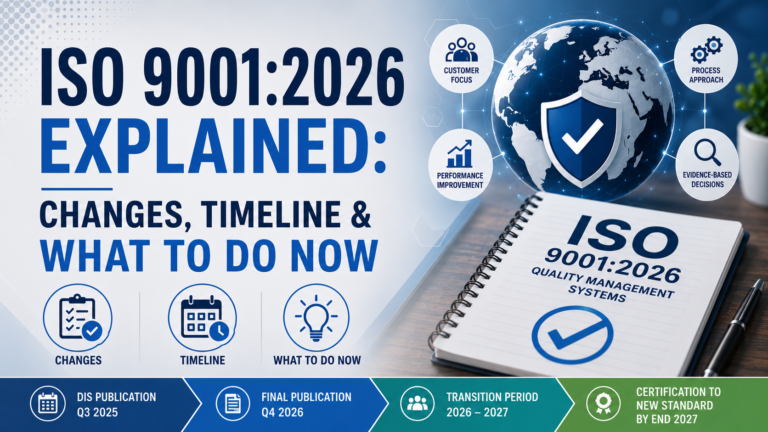

An ISO 9001 management review is the one meeting where top management proves it actually runs the quality system. Auditors ask for the records in almost every surveillance and certification audit, and thin minutes are an easy finding. This guide sets out what the review must cover, a seven-item agenda you can reuse, and what changed in the 2026 edition.
What ISO 9001 management review requires
Clause 9.3 requires top management to review the quality management system (QMS) at planned intervals. The aim is to confirm it stays suitable, adequate and effective, and that it supports the organisation’s strategic direction. ISO’s own overview names regular internal audits and management reviews as key to keeping a QMS effective.
Who should attend
Top management must take part, not just the quality manager. The quality manager prepares the inputs, but the CEO, general manager or equivalent owns the decisions. Invite process owners when their data is on the agenda, and record who attended, because the attendance list is evidence that top management took part.
How often to hold it
The standard says “planned intervals” without fixing a number. Most organisations meet once or twice a year, and quarterly sessions suit fast-changing operations. Set the schedule in advance and keep to it. The records behind each meeting are covered in our guide to ISO 9001 documentation required for certification.
ISO 9001 management review inputs: the 7-item agenda
These seven items work as a standing agenda and cover the inputs listed in clause 9.3.2. Use them to turn each ISO 9001 management review into a structured discussion rather than a slide show.
1. Status of actions from previous reviews
Open every meeting here. Show each earlier decision, its owner, its due date and whether it closed. Unclosed actions are the quickest sign that the review is a formality.
2. Changes in issues and interested-party needs
Cover shifts in external and internal issues, such as new regulation, market moves or a restructure. The 2026 edition also asks you to consider changes in the needs and expectations of relevant interested parties.
3. Customer satisfaction and feedback
Present complaints, survey results and feedback from other relevant interested parties. Show the trend over several periods, not just the latest score, and link any adverse trend to a corrective action.
4. Quality objectives and process performance
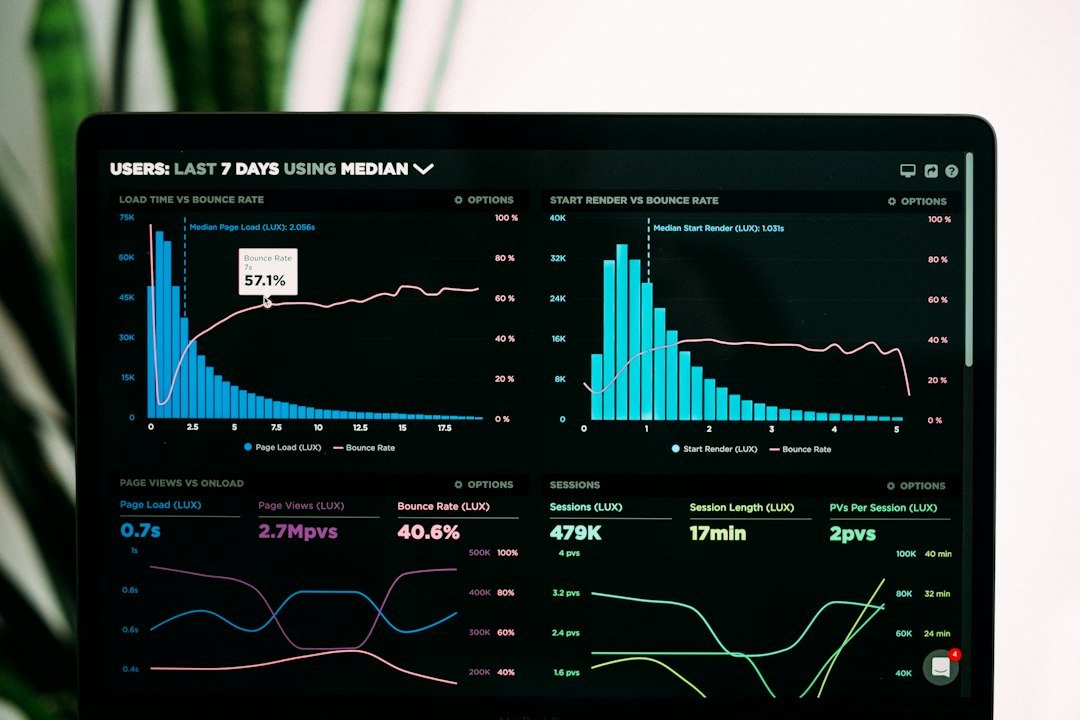
Report how far objectives were met and how well processes deliver conforming products and services. Use charts and targets so the discussion starts from facts. If a target was missed, record why and what will change.
5. Nonconformities, corrective actions and audit results
Summarise nonconformities, corrective actions, monitoring and measurement results, and internal and external audit findings. Our corrective action CAPA guide shows how to prove an action worked, and our article on why internal audits still fail external audits covers audit quality.
6. Performance of external providers
Review supplier and subcontractor performance against your agreed criteria. Our ISO 9001 supplier quality checklist maps this to clause 8.4.
7. Risks, opportunities and resources
Judge whether resources are adequate and whether actions on risks and opportunities worked. In the 2026 edition these two evaluations are separate inputs, so give each its own slot on the agenda.
Management review outputs auditors expect
An ISO 9001 management review must end with recorded results. The 2026 wording speaks of results rather than outputs, and expects decisions on three points:
- Opportunities for continual improvement.
- Any need for changes to the QMS.
- Resource needs.
Assign every decision a named owner and a due date. Those two fields turn a discussion into a tracked action and give the next review its first agenda item. Keep the minutes as documented evidence: attendees, inputs presented, decisions, owners and dates. Control the record under your document control process so auditors can trace every decision.
How the 2026 edition changes ISO 9001 management review
ISO 9001:2026 was published in September 2026 and keeps the familiar clause structure. For management review, the changes are targeted rather than radical. Advisera’s clause-by-clause comparison lists the revisions to clauses 9.3.2 and 9.3.3:
- Inputs now include changes in the needs and expectations of interested parties.
- The effectiveness of actions on risks and on opportunities appears as two separate inputs.
- Results explicitly cover improvement opportunities, QMS changes and resource needs.
If you already run a disciplined review, update your agenda template and minutes format. Our overview of the ISO 9001:2026 revision covers the wider changes.
Five mistakes that weaken the review
Auditors see the same weak points again and again. Avoid these five.
- Delegating the meeting. If top management sends deputies, the review loses authority.
- Skipping earlier actions. Auditors check that last review’s decisions were closed.
- Presenting data without conclusions. Slides alone are not decisions.
- Treating it as an annual ritual. An ISO 9001 management review held only before the audit shows.
- Keeping thin minutes. Without owners and dates, decisions cannot be verified.
If you run several standards, a combined session can save time. Our QHSE integration guide explains how to structure one.
Conclusion: turn the review into decisions
A strong ISO 9001 management review turns data into decisions that top management owns and tracks. Build the seven-item agenda into your calendar, update it for the 2026 inputs, and keep concise minutes that show who decided what. Do that, and the review becomes your best evidence that the QMS works. Explore more guides and documentation at Standards Unlimited.