
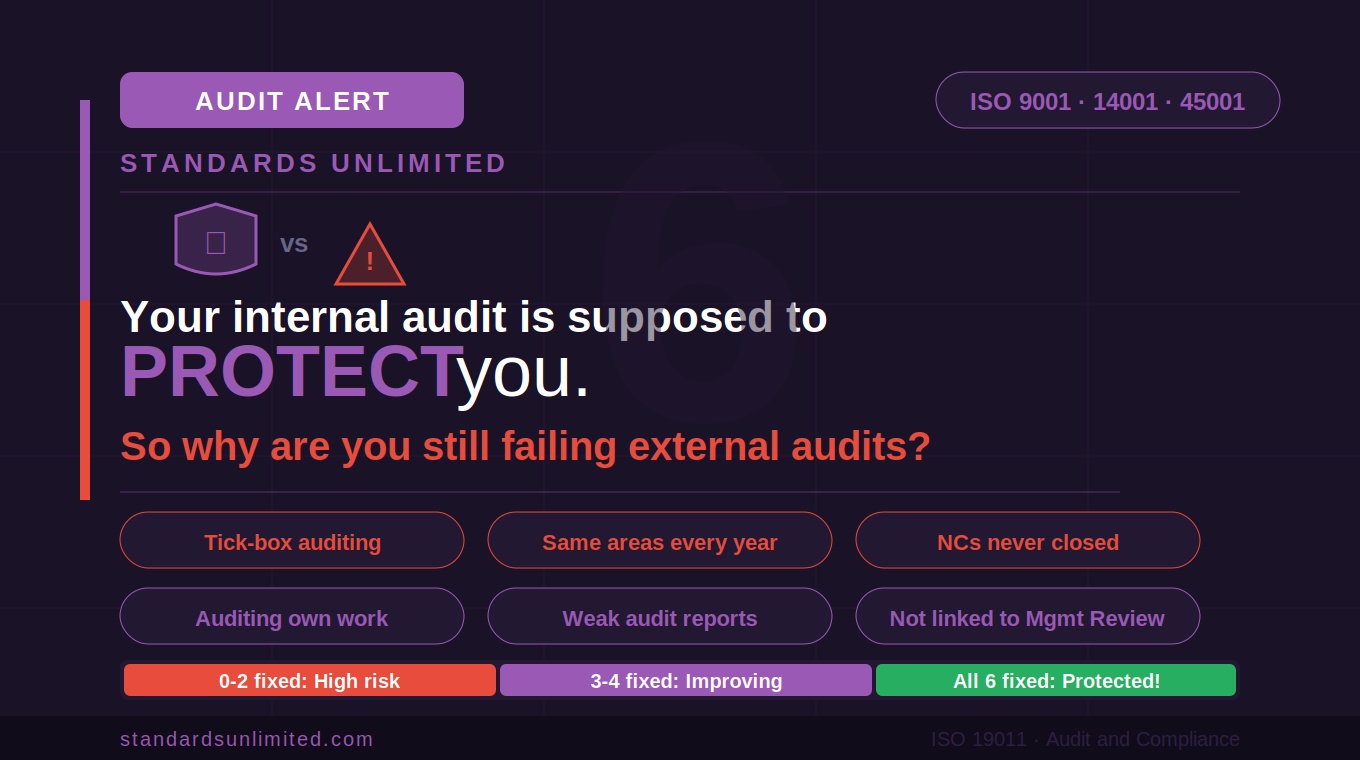
⚠️ Your internal audit programme is supposed to PROTECT you from external audit findings.
But for many organisations — it is actually making things WORSE.
Here are the 6 most common internal audit failures seen across ISO, BRCGS, FSSC and HSE systems 👇
━━━━━━━━━━━━━━━
❌ FAILURE 1 — Auditing for Compliance, Not Risk
━━━━━━━━━━━━━━━
Most internal auditors go through the standard clause by clause, ticking boxes. But external auditors look at RISK. They ask — “what could go wrong here and is it controlled?”
✅ Fix: Shift your audit approach from document checking to risk-based questioning. Ask “what if” — not just “do you have this procedure?”
━━━━━━━━━━━━━━━
❌ FAILURE 2 — Auditing the Same Areas Every Year
━━━━━━━━━━━━━━━
Many audit programmes audit the same departments, same processes, same people — year after year. This creates blind spots and misses emerging risks entirely.
✅ Fix: Your audit schedule must be risk-based. High-risk areas and processes should be audited more frequently. New processes, new suppliers, and recent incidents must trigger an audit.
━━━━━━━━━━━━━━━
❌ FAILURE 3 — Non-Conformances Raised But Never Closed
━━━━━━━━━━━━━━━
This is one of the most common findings in external audits — open non-conformances from previous internal audits with no verified closure. It signals your corrective action system does not work.
✅ Fix: Every NC must have a root cause, a corrective action, a responsible person, a deadline, and a verified closure with evidence. No exceptions.
━━━━━━━━━━━━━━━
❌ FAILURE 4 — Internal Auditors Auditing Their Own Work
━━━━━━━━━━━━━━━
ISO 19011 and every major standard is clear — auditors must be objective and impartial. Auditing your own department or processes is a direct conflict of interest and will be flagged immediately by an external auditor.
✅ Fix: Cross-audit between departments. If you work in QA — audit Operations. If you work in Production — audit HSE. Document the independence clearly.
━━━━━━━━━━━━━━━
❌ FAILURE 5 — Audit Reports That Say Nothing Useful
━━━━━━━━━━━━━━━
“Documentation reviewed. No issues found.” — This is not an audit report. It is a liability. Vague reports with no objective evidence, no observations, no opportunities for improvement give management nothing to act on.
✅ Fix: Every audit report must include: scope, criteria, evidence reviewed, findings, non-conformances with clause reference, observations, and a summary for management review.
━━━━━━━━━━━━━━━
❌ FAILURE 6 — Audit Programme Not Linked to Management Review
━━━━━━━━━━━━━━━
Internal audit results are a mandatory INPUT to Management Review under every major standard. Yet many organisations treat them as separate activities, meaning leadership never sees the full picture.
✅ Fix: Internal audit results — including trends in NCs, repeat findings, and open actions — must be formally presented at Management Review. Document this link clearly.
━━━━━━━━━━━━━━━
💡 SELF-ASSESSMENT — HOW IS YOUR AUDIT PROGRAMME?
━━━━━━━━━━━━━━━
Score yourself honestly:
✅ 6 out of 6 — Your audit programme is world class 🏆
⚠️ 3–5 out of 6 — Some gaps to address before your next external audit
❌ Less than 3 — Your audit programme is a risk, not a protection
💬 Which of these failures is most common in YOUR organisation?
Drop your answer in the comments — let us learn from each other! 👇
Save this post for your next audit programme review! 🔖
Tag your internal auditors — they NEED to see this! 👇
#InternalAudit #ISO9001 #ISO14001 #ISO45001 #BRCGS #FSSC22000 #QualityManagement #HSE #AuditReady #Compliance #ManagementReview #ContinualImprovement #RiskBasedThinking #ISO19011 #FoodSafety #NonConformance #QualityAssurance